
PILATES IS NOT JUST FOR WOMEN: FROM RECOVERY TO PERFORMANCE
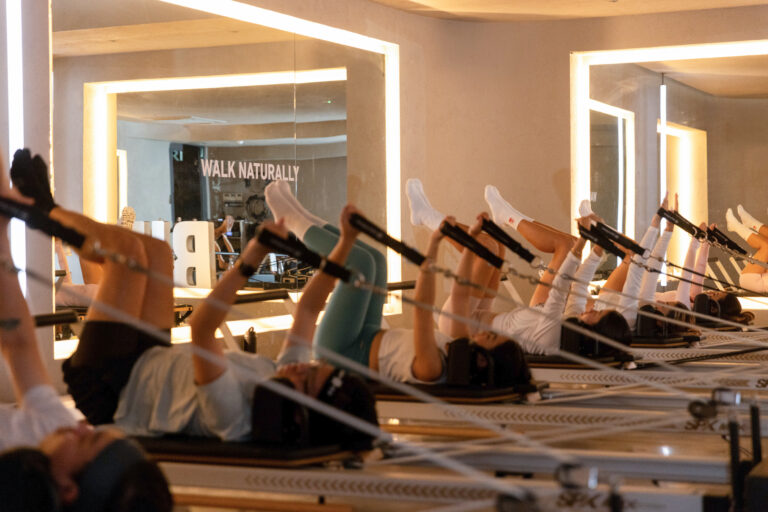
Often associated with women and the goal of building body flexibility, Reformer Pilates is frequently seen by men as a light workout. But the history of this discipline tells a different story. From its early foundations in physical rehabilitation to its application in modern fitness trends, Pilates is built on principles like strength, control, flexibility, [...]

Often associated with women and the goal of building body flexibility, Reformer Pilates is frequently seen by men as a light workout. But the history of this discipline tells a different story. From its early foundations in physical rehabilitation to its application in modern fitness trends, Pilates is built on principles like strength, control, flexibility, and movement quality. And these are the essential elements for any healthy body, not just for women.
1. The forgotten history: Pilates originally started for men
Joseph Hubertus Pilates (1883 – 1967) is the father of Pilates. He was a German gymnast, boxer, and circus performer before developing the method he called “Contrology” – a movement system focusing on body control, breath, and coordination.
The idea for the Reformer began to take shape during World War I, when Pilates was interned on the Isle of Man (in the Irish Sea, between Great Britain and Ireland). During this time, he experimented with attaching springs to hospital bed frames to help injured soldiers perform rehabilitation exercises right in bed.
After the war, his method continued to be used by those with high physical demands, including boxers, wrestlers, and athletes.
It wasn’t until later, when Pilates opened a studio in New York (USA) in 1926 and started working with the dance community, that the discipline gradually became associated with dancers – mostly women. Since then, the image that “Pilates is for women” gradually became popular in public perception.
But the essence of Pilates has never been limited by gender.
2. The science behind the Reformer: Why do men need it?
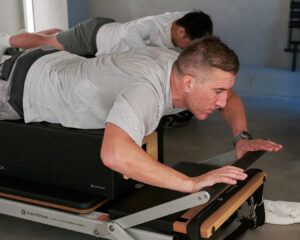
Every sport men typically pursue leaves its own “mark” on the body, and most of these marks can be addressed with Reformer Pilates.
Gym-goers and weightlifters: Focusing heavily on large muscle groups (chest, shoulders, back) while neglecting deep core and shoulder stabilizer muscles can easily lead to a hunched posture, rounded shoulders, and muscle imbalances. Training with the Reformer forces stabilizing muscles like the transverse abdominis, multifidus, and shoulder stabilizers to work constantly to maintain balance on a sliding surface – something free weights struggle to create. This is also the foundation that helps compound lifts like squats and deadlifts be performed more safely and effectively.
Runners and cyclists: The repetitive nature of movement in a single plane causes the hamstrings, hip flexors, and thoracic spine to tighten up, easily leading to muscle strain and a shorter stride. Studies show that after 6–12 weeks of Reformer training, hamstring length, hip flexor flexibility, and thoracic spine mobility all improve significantly, directly addressing the weak points of runners and cyclists.
Contact sport players (football, martial arts): Twisting, sprinting, and colliding require excellent core control and body awareness. The Reformer improves dynamic balance and body coordination, helping to reduce the risk of groin and hamstring injuries – the most common injuries in this group.
Office workers with prolonged sitting: Prolonged sitting shortens the hip flexors and puts the glutes to “sleep”, putting pressure on the spine. Research shows that Reformer Pilates helps reduce pain, decrease disability levels, and improve sleep quality in people with chronic lower back issues – a problem that, while not gender-specific, is especially common in anyone doing desk work due to a lack of active stretching.
In the long run, the progress in lower body strength, shoulder stability, and core control provided by the Reformer not only helps prevent injuries but also translates directly into better performance in any sport men are pursuing.
3. 2026 Trends: Functional fitness and injury prevention
The fitness industry in 2026 is witnessing a clear shift from a “looking good” mindset to “moving efficiently” and “feeling better”. Recovery studios focusing on flexibility, stretching, and Pilates are the fastest-growing segment, as consumers realize that recovery is just as important as high-intensity training.
Notably, men aged 30-50 are the fastest-growing customer base at recovery services, largely due to physical wear and tear accumulated over time. Reformer Pilates, as a result, is being positioned as an active recovery method, serving as a perfect complement to high-intensity programs like HIIT or CrossFit.
4. Breaking the stereotype: Pilates is not “easy” at all
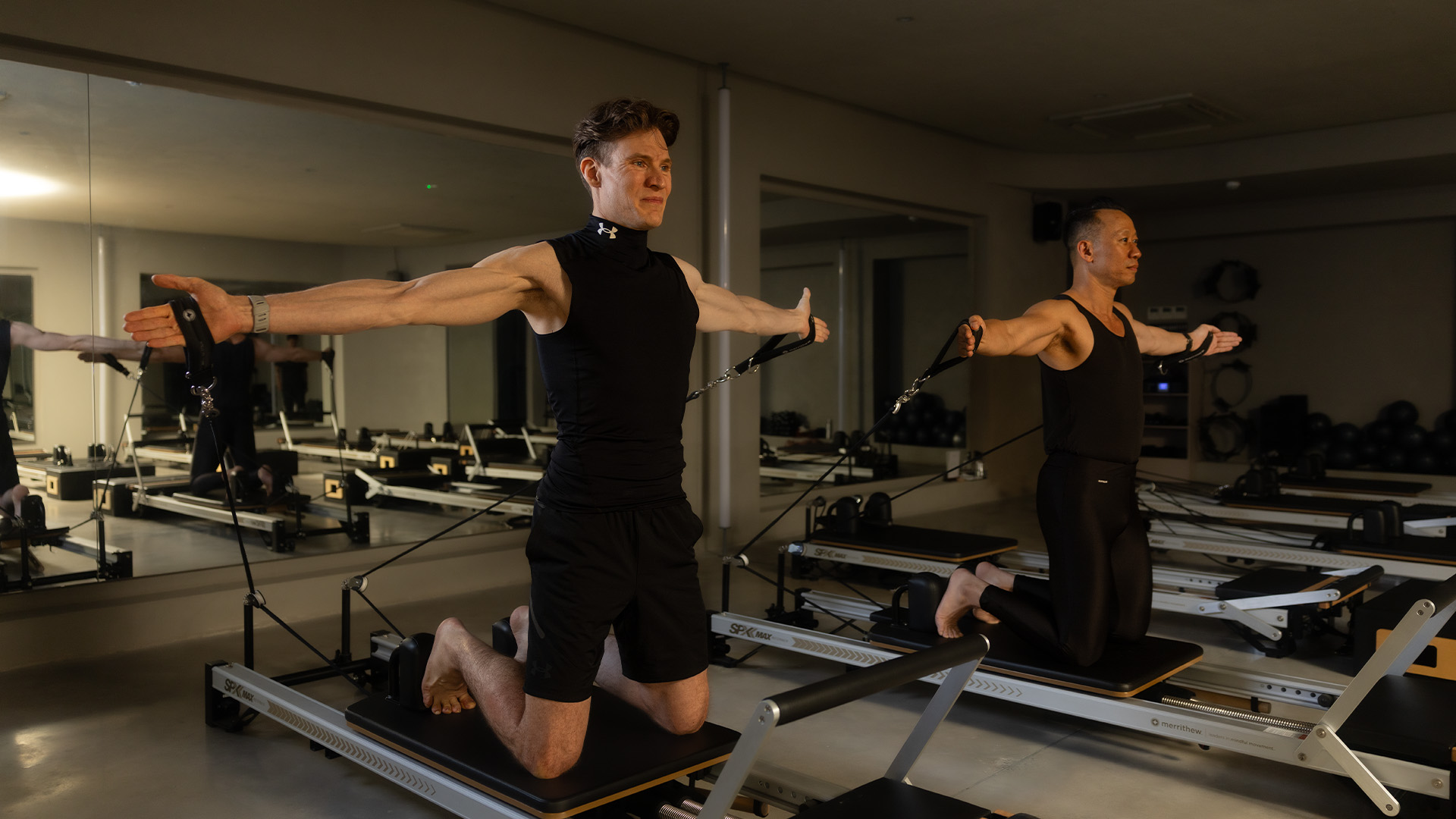
Many men, when first approaching the Reformer, often have a skeptical mindset, thinking this discipline “looks quite light.” But after just one or two sessions, they quickly realize the true level of challenge comes from the combination of spring resistance and the instability of the sliding bed (carriage) — which demands continuous muscle control, not just raw muscle strength. This is also why the retention rate among men often increases significantly once they feel the improvements in flexibility, recovery, and movement performance.
5. Who should do Reformer Pilates?
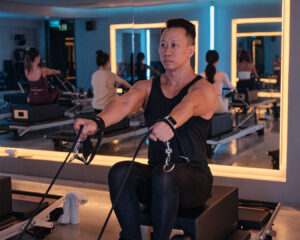
Men over 30: to prevent injuries, maintain flexibility, and promote physical recovery.
Athletes (runners, cyclists, weightlifters): to enhance performance and reduce injury risks.
Office workers: to improve posture and relieve lower back pain caused by prolonged sitting.
People recovering from injuries: for active training under professional guidance.
Pilates has never been a story exclusively for one gender. The values of this discipline, from core strength and flexibility to body control, are beneficial in any fitness journey.
Especially for men, the Reformer can become a complementary tool for strength, mobility, and physical performance.
Don’t just judge the Reformer by its appearance.
Experience a Pilates session at MOVE Vietnam and feel your body in a different way.